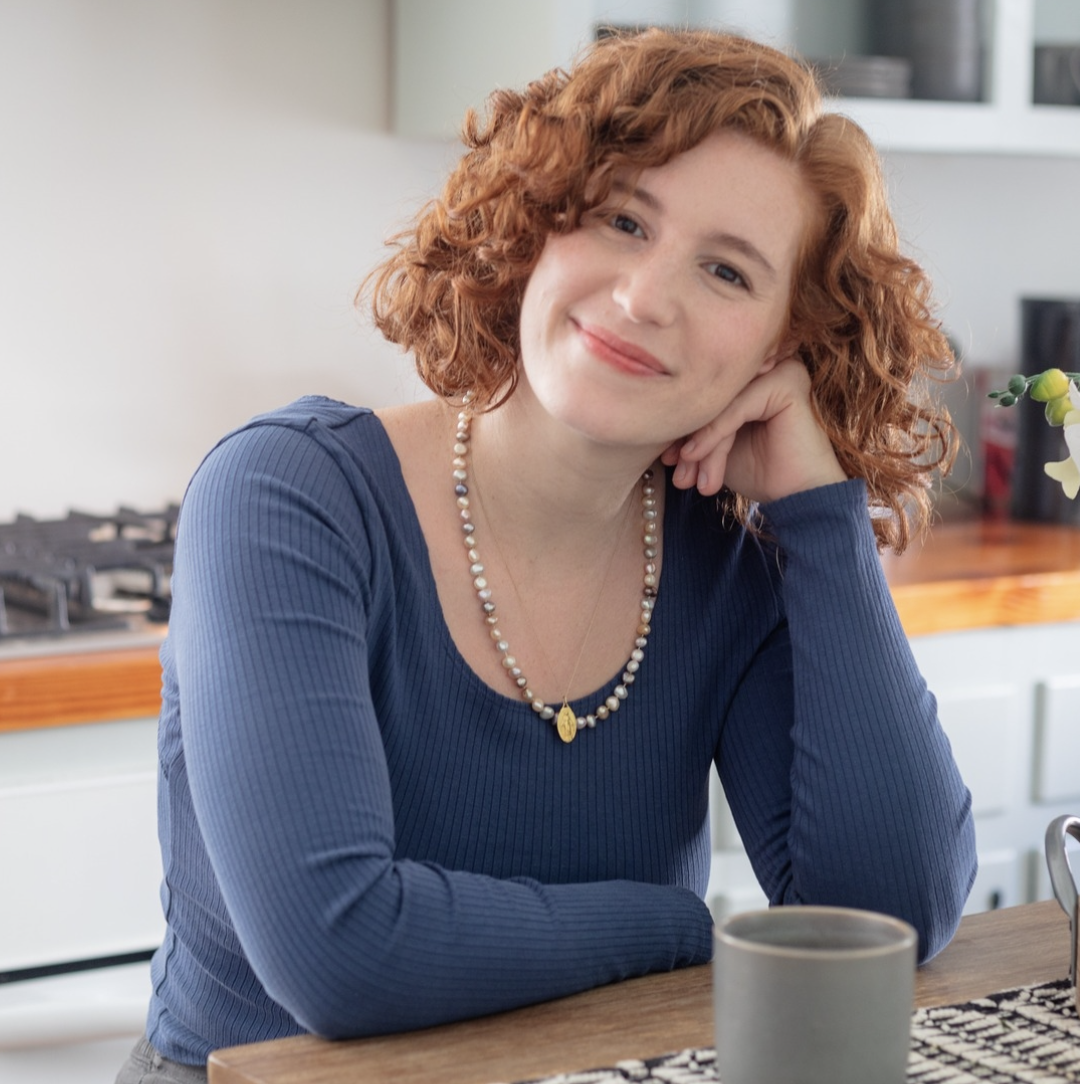
Sarah MacKenzie
How to Love your Homeschool Life: An Interview with Sarah MacKenzie of Read-Aloud Revival
GMT20240202-190010_Recording_640x360
[00:00:00] Sarah, thank you so much for being here today. I just am so excited that our listeners get to learn from you and that you're going to pour into us today. First question I really wanted to ask you. It was, what was your original vision for homeschooling, and how did that evolve as you got into it over the years.
Yeah. So that's such a good question. Um, our oldest is 22. So, uh, back when she was a baby, I stumbled across, uh, I think it was at the library. I stumbled across like a homeschooling book and this was a completely foreign idea to me. I didn't know anybody who homeschooled. Like it wasn't something I saw in action, but I was.
Intrigued by it because as she got older, you know, I think I stumbled across my first homeschooling book when she was like two, but then by the time she was like four and five, I thought, I don't want to send her away to school now. Like I'm really enjoying her. And about that time, I also stumbled [00:01:00] across the blog of Elizabeth Foss.
Um, I was also a baby Catholic then I had just converted. I converted when my oldest was. three or four. I can't remember. She was three or four. So Elizabeth really did. I don't know if you're, your listeners are, are familiar with Elizabeth Foss.
Um, but she is a homeschooling mom of nine. Um, Most of hers are all grown now at the time though. She was just blogging about her everyday life. And she really gave me a vision for home education and Catholic family life that I really was, it really captured my imagination and inspired me. And so, um, I also was reading some other blogs and things online.
Um, but my husband was very much like. We're not homeschooling these children. Like, I knew one homeschooling family growing up, he would say, and they were super weird, like, we're not doing this, but, um, my vision was, it was interesting because I think I had a very unrealistic idea, [00:02:00] like, I sort of had this idea of, like, This is not any bloggers, like picture they were giving me, but it was just in my head.
Like I could imagine myself like sitting on the hearth, you know, reading aloud with all my children, like surrounding me. I don't know. It was very idyllic. Uh, and that is not what homeschooling actually looked like. But in the early days before we, we really decided to homeschool, um, my husband was pretty opposed to it.
And really because we didn't know anybody who did. It was. such an unusual idea at the time for us, especially, um, and, uh, I knew we were actually arguing about it because it was time to sign our oldest up for kindergarten, but I also knew that God would not call him to one thing and me to another. And so I just prayed like, I will stop arguing about it and I'm just going to trust God's leading here.
So I like. chose at the time we were in a school district where you could like choose which school you wanted your child to go to as long as you did at the beginning of kindergarten, like you couldn't switch after that. But so I visited all these schools. I quit [00:03:00] arguing with my husband about it, which took a lot of restraint on my part.
Um, and I was like ready to sign her up for kindergarten and he came home from work one day. To this day, he does not remember what spurred this, but he came home and said, okay, you can just do kindergarten. It was probably in hindsight, I mean, it was a pretty, like, crime ridden area. So, like, he probably, it was probably something, like, around that, but it was, like, one year.
And then, We're like halfway through kindergarten and he's like, okay, you can have one more. Yeah, that's all you need, right? And like now, we homeschooled her all the way through, so we have six kids. Three of them have been homeschooled all the way through. They're all off at university now. Uh, and we've got three that are still being homeschooled.
And he does at least half the homeschooling now. So it's so interesting how God does things like that over time. I know. That's amazing. Yeah. We had, um, we had a some way, well, I won't say we had a similar thing. I had a similar background. Like I did. I only knew like one homeschooling family growing up, but my husband actually was raised as a homeschooler and I kind of was like, well, you took that kind of [00:04:00] cool.
Like, so it can't be all that bad. Yeah. I like you. I think, you know, you're smart and normal. I guess it's okay. Well, why don't we try that? Yeah. Yeah. So fun. Can I ask you though, as you got into it, what do you think was the most challenging season of homeschooling for you? Oh, nobody's ever asked me that.
That's such a good question for me when I was homeschooling older kids with babies. So when our, our twins are our fifth and sixth and when they were born, um, we had a one and a half year old Clara was one and a half. Twins are brand new newborns, and we had, um, an 8, 10, and 12 year old. So those are like ages where, you know, for the first few years, I think most of us are sort of comfortable doing like, okay, we're doing survival homeschool.
We know if you have like toddlers and babies, you're exhausted. You're not getting enough sleep. You're probably not doing as much in your homeschool as you thought you were going to when you first had like, The vision of like what your homeschool is going to look like, but it's okay. It's just a season.
But for some of us, that season just [00:05:00] keeps going. Restarts the clock every time. Exactly. It doesn't feel like a season. It sort of starts to feel like a life at that point, you know? And then with a 12 year old, you definitely feel that pressure of like, Oh goodness. We cannot just keep having survival years.
We have to like start doing things. We did it by the way. We kept having survival years and it all worked out. We can talk about that too, but, um, she, it's so interesting to talk to her now about those years, um, actually to talk to all of the older kids now about those years, because it's so not impressive.
If you were to look on paper at like what we actually did in our homeschool day, it was barely anything. It was like reading aloud, online math, some independent reading, like some. It's like, uh, phonics workbooks and stuff for the younger ones. Like, and that was it. It's like all I could, it's all I could manage.
And yet. It ends up being like God makes it enough and the things that she talks about now as far as [00:06:00] homeschooling making such an impact on her. She's about to graduate from Franciscan University of Steubenville this spring and she will say it's so, it's so fun to watch. I have to say, like, I really felt like the baby and toddler years were especially trying, but the teen years, everybody worries about.
I really have enjoyed those. It's really fun to watch young adults fly. There's something like, you know, it's like bittersweet because, you know, you miss them, but also watching your kids like really. Thrive in the world and watching God move in their lives. It's really beautiful. It's really fun. I really enjoy it anyway.
She will say about those early years that the things that she learned that mattered so much more than anything she could get from a workbook or a lesson plan or curriculum, um, or those simple sibling bonds and watching basically her parents die to themselves by having all these babies, like there's nothing like having a toddler to like.
Teach you what it's like to lay your life down for another, right? So it's just [00:07:00] the things that are really hard to quantify. And I think that's why those years were so hard. Um, and are so hard for so many of us, because it's really hard to quantify like, Oh, this is worth it. Or I'm doing a good job when you're just bone tired and exhausted.
And I also struggled with postpartum depression, anxiety. So like all of that, like wrapped up in what is already. something that you're kind of like you're taking on this huge task and the people in your life are probably like, you know, you could just put them in school. You're like, I know, but I don't think I'm supposed to.
Like, I know it's hard and I know I was just complaining about it, but also I don't want to not do it because I feel like this is what God's calling me to, but it's really hard. Yes, it really is. It really is. It's one of those, like, all encompassing, all in kind of things. And I remember thinking, like, when I was younger, I was a nanny.
I was like, oh, I'll be so good at this parenting thing. But it just doesn't prepare you for the fact that there's no, you don't leave at five o'clock. You're working through [00:08:00] the night too. And it just, it goes and it goes, but it's, it's so amazing and so rewarding. Now, one of the things that you, you touched on, you said that, you know, you just felt like you weren't doing all that much school during this season.
I know one of the things that moms are just constantly plagued by, even if they're not homeschooling is this, like, I'm not good enough thought. It just. is a constant struggle of always wondering, am I doing enough? Am I good enough? What kind of advice would you give for just really like gauging whether you're, whether you're making hitting the right mix of things, whether you're doing enough stuff where you're checking enough boxes, or is there even just a different mindset entirely you'd suggest working on?
Okay. There's a few different thoughts that come to mind for this. One of those is that, um, Well, first I'll tell you about one of my biggest mistakes I made early homeschooling, which was that I was reading all the homeschooling books and all the blogs and doing all the research. And so I really felt like I knew the best way to educate our kids and really kind of ignore my [00:09:00] husband's insight.
That's probably an understatement. I really just didn't pay attention to his insight or like his. Desires for our children's education. And it created a lot of like strife between us and friction. And what I realized is of course he loves our children every bit as much as I do. I'm not sure how that's possible, but I know that's true, you know?
Um, and so when I started asking him, like, what, what looks like enough for you, like what's most important for you to see at the end of the week or the end of the school year or whatever, what I realized is, um. It was a lot less like in my head. I think a lot of times in our heads, we think we have to do like English and math and science and history and geography and penmanship and Latin and all of these things all the time, all year long.
When I asked my husband, like, what really matters to you? What he really wanted was math, which is by the way, not the thing that I would have come up with. And so what that did is it helped me choose, like, if I was to ask [00:10:00] myself, If everything, nothing else gets done today, but you get to one thing, what should that thing be?
Or maybe two things, what should those two things be? What I realized is my answer plus my husband's answer is like the foundation. So then you can say like, okay, well for me it would be reading aloud. For my husband it's math. And so those can be like our non negotiable things that happen every day. And that like, there are, there were lots of years where we did not do.
Any science or any history at all. And there's a lot of that that can be made up later. Like when your kids are interested and they can do a lot more of that, like self directed type of learning. And also they're motivated. Like my son, it's a freshman in university right now. He's so into philosophy that like over Christmas break, he's reading Marcus Aurelius just for fun.
And I'm like, interesting, you know, it's like one of those things where you're like. They'll do it because they have a different kind of motivation, so you don't have to get it all in when they're at home. What you're trying to do is lay this groundwork for learning so that they keep [00:11:00] wanting to learn when they leave.
But this question of like, am I doing enough? I think there's two things that really come to mind for me. One is that that's not really a question. We all ask it. I ask myself this all the time, right? But, like, Kelsey, if I was to ask you, like, are you doing enough in your homeschool today? You can't really answer that question.
If I said, are you doing enough? I think the answer would always, I think the answer would always feel like, no, like, no matter how much I was doing, it would always be like, but there's more I could do. Exactly. But then if we, like, extended that question out and made it a more complete question, like, well, what I meant was, are you doing enough to, like, make sure your kids are getting enough math?
Well, you might have been thinking like, Oh, we're not like praying a rosary or reading scripture or whatever. And those things actually aren't going to help them do math. Or I could have been like, are you doing enough to pass on your faith and doing the math book? Has that's not going to really do it.
You know what I'm saying? It's like, it's an impossible question because no matter what. No one's ever doing enough. That's just not a question. [00:12:00] It's not a full question. So when we get really clear, like, Oh, wait, what's the question I'm asking myself? Like, what am I actually worried about right now? Am I doing enough to make sure my kid can read?
Maybe I have a nine year old who's not reading fluently and I'm very stressed about this. Am I doing enough to make sure that they're getting what they need so that they can read? That's a, like all of a sudden. Um, solutions kind of start to bubble to the surface because I'll think, well, what do I need to do to help my kid read and now it like it shrinks the problem down instead of being like this big nebulous cloud that's like, are you doing enough to who knows what we'd none of us actually know what we're going for there, you know, but can we make shrink it down?
But then there's a second part to that question of, are you doing enough that? I really feel like. If we're honest, the answer is almost always is pretty much always no. And the reason for that is that we can't so that we were never asked to. So I love this. Um, I love this image of like Jesus feeding the 5, 000 on the hillside, you know, like everybody's hungry.
The, the disciples are [00:13:00] like, send them away. We don't have what they need, which is kind of how I feel in my homeschool. Right? Like I do not have what these children need, like send them away somewhere else. When you're that outnumbered. It's like, no, I'm just not enough. I can't possibly there's three kids crying at the same time.
And one of me. Yeah, exactly. Exactly. Then if we think about like, you know, Jesus could have just fed everybody instantly right on that hillside. And it maybe would have been more. Impressive or spectacular, but that's not what he did. What he did is said, bring me what you have. So they bring him like this basket of loaves and fish from a kid in the, in the crowd.
Right. And for like this, this is what we have 5, 000 people. Like when's the last time we saw 5, 000 people. That's a lot of people. Right. It's like an arena full of people. Well, He says, bring me what you have and I'll make it enough. And I feel like as homeschooling moms, if we feel like, well, I don't need to know that I'm doing enough.
We're forgetting Jesus in that whole equation. Like the, you [00:14:00] will never be enough. And you're never going to feel like you are doing enough. And as soon as you do, we better hit our knees because all of a sudden it means that we forgot that we need Jesus. The whole question, the whole premise, I ask it to all the time.
We all ask it, but I think it's really helpful to remember, like, what are we being called to do here? We're being called to bring. And I think it's easier to see that now, like now that I've got three that are all off at college and are thriving there, like I can see like, Oh, so interesting. We literally didn't do science for like five years.
You know, we, I forgot to teach entire subjects. Uh, I never taught my kids much grammar and my oldest daughter got her degree is getting finishing her degree right now in English. That's like, you're kind of like, Oh, boy. How is that gonna? He makes it enough. He really does. And so I feel like it's easier to see like once you it's hard to see when you're in it.
And so you just have to like Ask every homeschooling mom that you know who has some kids graduated, like, what do [00:15:00] you wish you did more of? What do you wish you did less of? And what I have found when I ask that question is they always say something about relationships, and they almost never mention anything academic, even though in the moment, the stuff I'm worried about is usually like, but my kid's not reading and doesn't know the difference between an adjective and a noun.
Oh my goodness. That's so reassuring. I honestly, like for me, one of the big things with homeschooling was that relationship. Like if you send your kids off for eight hours a day, it just feels like there's so little time left together as a family. And I just love that. That's so, it brings a lot of leftovers too.
It's like the time of day when everyone's like tired and I am anyway. So I want to ask the flip side of that question. Like, how did you decide what to say no to?
I am like a very much a yes person, right? And personality wise, like I want to do all the things all the time. I'm very, like, I, I, my energy, you know, that, um, [00:16:00] that expression, like your eyes are to your. Yeah, your eyes are too big for your stomach. That's what I'm thinking of. I feel like that with energy.
Like, I'll be like, I can do all these things. And then no, you can't. And also if you're, if you have, you're up all night with a newborn or a teething toddler or whatever, or, or you're up really late with your teenagers and up really early with your young ones, which is a special cross that some of us can bear.
Right. Um, it's.
A lot of times we have this idea of like what we want and then we're like struck with this reality of our limits. Um, yeah, I can relate. Like there have been times where I've been like halfway through laminating 300 things going, what did I get myself into? Yeah. Seems like such a good idea when I started, right?
Really did. Really did. Not feeling it now. Now I think, um, I heard this and I don't remember who I heard this from. It might have been like James Clear's Atomic Habits. I don't know. [00:17:00] Um, but the idea that when we say Yes, it feels like it's so you can even think about this to yourself. Like, if I say yes, I'm going to also do geography and Latin and science and co op and whatever else, right?
Like all these different things. It feels good in the moment, but actually every yes is a thousand no's because when I say yes, we're going to do co op that immediately means Wednesdays. We're not doing anything else, you know, or yes, we're going to do this geography curriculum. That means no, we're not going to be reading aloud during that time because we're going to be doing.
Yeah. And we're also not going to be. Uh, having downtime at that time, or doing math at that time, or having playdates at that time, or running errands, or going to holy hour. Like none of those things are going to happen because we are saying yes to the geography. That's fine. But if we're aware that every yes we say, even to ourselves, is a thousand no's, becomes a little bit easier for us to start saying no.
Like one no. It's like, I'm not doing this thing, which, but I, I still have all these options instead of. Yes, [00:18:00] I'm committing to this thing and I just said no to a million options. To me, that feels like, it feels more reassuring because I think it's like this internal FOMO and maybe this is a personality thing too, but.
Like I were, you know, I know I've worried so many times over the years about like, Oh, but that curriculum looks so bad. I always say geography because there's this one literature based geography program that always looked so Inspiring to me. It's like read alouds and map and art I love all of those things and but I never once was able to make it happen with my older kids and I think There's this like tendency to go just because something has a benefit or it could be good.
It's like, is it the best good? So for me, I'm always thinking like in our home, um, read alouds and reading alone are like really they rise to the surface above everything else. And then, like I said, talking with my husband and discovering that math was really important to him, like a solid math education.
Uh, which can't come from me, by the way. So it all has to be outsourced [00:19:00] immediately upon learning that I'm like, Oh, okay. So we need to sign up for some online classes, I guess. Um, see, I love that. I love that because like. It goes back to that idea of, no, we really aren't enough by ourselves. And it's so smart to actually look at that and say, okay, what are my strengths?
And what, where can I call on the rest of, you know, all these other people in the world that God has made that we can all like help raise these children together. You know, what's so interesting about that is like. I think a lot of times, unless something is hard or kind of miserable, we almost don't know if it counts.
You know what I mean? Like we almost don't credit it with counting because, um, when I think back to like the teachers that I learned the most from, and still as an adult, like when I listened to like Ken Ludwig talk about Shakespeare or like Tim McIntosh from Searcy Institute, when he talks about Shakespeare, like I want to do all like, I get so excited because the way they talk about it is like, You can tell they're really enjoying themselves.
So if we were to apply that in our [00:20:00] homeschool and go like, well, I'm just going to teach the things that I'm most excited about. And then I'm going to see if I can find other people who are more excited about other things. What I found in the early years, um, the science that we did do, we did at our co op because a friend of mine, who's a nurse had like this huge aquarium at her house.
And she would bring the kids there and teach them all different kinds of things about the fish and all the growing things in the ecosystem that, and the way she taught it is the same way that I would have taught like Charlotte's web, because she really loved that. And I really loved this. And in our homeschools, we actually have a unique opportunity to see if we can, um, Like put our kids at the feet of teachers who are showing that kind of radiant joy about learning, which it really goes further than yeah, go ahead.
It really is cool because I think in so many ways we have that chance of kind of having this all a car experience with homeschooling. It doesn't have to be. Yeah. Yeah, we're not really, we're, we have so many more options, so [00:21:00] much more available, so much more flexibility. Especially now, I mean, even the difference between now homeschooling and when I was homeschooling my oldest when she was six, and that was even, I had way more options than the people who were homeschooling 20 years before me.
So like, we, I mean, we almost have an embarrassment of riches in the homeschool world as far as, as like what we could use for resources. And in some ways, I kind of think that makes that trickier because yes, especially with like social media, like we see all the pictures of things that other people are doing and we're like, Oh, but I want, I'm not giving my kids that right.
I'm going to do 12 different kinds of homeschooling all at the same time while I'm sleep deprived. Absolutely. Yeah. And we are not taking into account that there are things that that other person, I mean, this is what I do. I'm, I really can't. handle being on Instagram, like personally. Um, and the reason why is because like, yeah, I get on there and I'm scrolling and I see like, somebody's making like homemade meals.
And [00:22:00] the other one's doing beautiful maps with their kids. And somebody else is taking their kids on nature heist. And another one has like a, a stack as tall as their kids are high of all the books that they read. And I combine all of these women into like one fictional. Imaginary homeschool that my homeschool can never compare with and then I like get off my phone This is all happening in like 45 seconds And then I put my phone down I look up and I've got like a kid with his shirt on Backwards that one definitely didn't brush his teeth.
The kitchen table is like I don't even know. There's no school stuff here. It's just everything else in my entire house is on it, you know, and I'm just like, Oh my gosh, why am I bad at this? And it's sort of this way that I think the devil lies to us about whether what we're actually being called to do and how we're being called to serve and what God can actually do with this little like
meager offering that we give every day. Absolutely. And you know, I was listening to your podcast recently. One of the things that just struck me, you were talking about homeschooling for the family you have. [00:23:00] Can you talk to us a little bit about that? Yeah. It seems to me that in homeschooling, we have such a gift because like your husband's different than my husband's different than my best friend's husband, right?
Well, they're all different. And our kids are all different and unique. And then we have all the different God given temperaments and personalities that we have and strengths and weaknesses and interests. And so God didn't give us our kids on accident. You know, he knew, he knew exactly what everybody needs and yet.
Uh, when I look at other homeschools and I compare what I have to what they are, they have or they're doing or whatever it is that there is on their plate, um, I like forget to honor the fact that God gave me these kids. He's not actually asking me to homeschool period. He's asked me to homeschool these children.
You know, he's not asking me. I don't have a vocation [00:24:00] to marriage. I have a vocation to marriage to Andrew, you know, so there is like a grace that's given to parenting these children and this marriage and this home and these circumstances with this amount of resources and this amount of time and this mental health issue and this postpartum issue and this other like it.
Kid that has to be taken in for 46 different therapies and appointments. All of this is like his specific gift for us. And I think it's so easy to lose sight of that and forget. And we just think like I'm supposed to homeschool and we forget to complete that sentence too. Like I'm supposed to homeschool these children in these circumstances and married to this person.
That's what I'm supposed to do, which looks a lot different than just homeschool. I'm supposed to homeschool. Yeah, I think you're so right. And I think like to, we see these things, we need to know like. For whatever reason, this is part of our sainthood journey. Not just us, each of our children's sainthood journey.
God has, he's put it here because he knows what we need. He knows like, and no one escapes the cross, right? We all have [00:25:00] different crosses we're carrying and we can't compare them. We don't know what they look like, but we know that it is the right cross for each of us when we're facing these challenges.
Oh, yes. So hard to remember when you're in it. It is. Or when you're in that moment of seeing something and you feel like, you know, we all know that homeschooling mom at our co op, who's like, it seems like she, I mean, it's the one with the home baked goods. Yeah. Yeah. And their kids can sing an eight part harmony and like, you're like, Oh my gosh, I can't, my, my son, I just found out doesn't even have underwear on today.
And I can't, I can't, I don't know how to cope. I don't know how to do this. I'm not very good at it. And then we start just like, Telling ourselves these untruths about whether we're cut out for this or we have what we need. And of course we have what we need. We have everything we need. We always do, but it's, yeah, it's hard.
Yeah. I love that verse too. It talks about, um, you know, my, my grace or sorry, my grace is sufficient for you because my power is made perfect in weakness. I'm always thinking about that. I'm like, all right, [00:26:00] he can work through our weakness.
Yeah, through all of these things that we aren't good enough at because we don't have to be because he is. Yeah, that's really good. Okay. So I always think too. Sorry. I'm like, I'm thinking about that first. I'm like, that's even, I'm going to keep thinking about that. Cause that even is like, kind of makes me question that idea of like, just playing to your own strengths or like, what are you really good at?
Because, um, when we're doing the things we're really good at in our homeschool, whether that I'm not great. I'm not, I can cook. I have six children, so I can cook, right? But I would not say this is like a gift. I would not say that, and I'm not like somebody who either really enjoys it or is very good at it.
Probably those things go together. Um, but. If we are always leaning into the things that we're good at, then we're forgetting that God isn't, [00:27:00] like, his power isn't made perfect in those things. So, like, the fact that we are terrible or stink or really struggle with these other things are the gift because, like, this, these, and this is, this is why I think it's so useful to, like, lean into community members who are strong in areas where you're weak because that is another way that we see the face of Jesus in the people around us.
Anyway. Yeah. I mean, I think there's just, there's just so much too in there for like just learning humility in this process. And God really does. He shows us with our kids, with homeschooling exactly where we need to be humble, right to the surface. Doesn't it? It does. Just like you said, how before we have children, we know exactly how this all should go down.
And then we have actual children. I saw someone with a t shirt that said on it, I was amazing at parenting before I had kids. I was like, I need one of those shirts. Yes, that's so true. Especially if you had a lot of experience, like it sounds like you did and I did too with babies and children. Cause you're like, Oh, I got [00:28:00] this.
Yeah, totally. I mean, I know everything now. Yeah. My like two years of babysitting. Yeah. Yeah. Exactly. Exactly. Exactly. Okay. One more question. Then I want to ask you a little bit about some exciting things coming up. Um, how do you balance meeting your own needs and like keeping burnout at bay in homeschooling?
At one point, I don't think it really hit home for me that I'm in this homeschool longer than anyone else until my oldest went off to college. Cause like I said, we homeschooled her from the beginning and then she went off to college and I was sort of like. Yeah, look, look, we like we apply to colleges and I'm like, Oh, I hope this worked the way that all those people who've done this before me said it.
What it does. It's great. It's like colleges really want your kids. It's super fabulous. Um, that all went great. And then I send her off and I'm like celebrating like, Ooh, look, we did it. And then I'm like, Oh, wait, I'm still here for a long time, right? Because like [00:29:00] our youngest are 10, which aren't that young, actually, but we still have, you know, eight more years of homeschooling and it occurred to me, Oh, you know, a lot of times in homeschooling, I would think like, what do my kids need?
What are their kids need. Learning styles or how would they prefer to learn or what would make them thrive and then forget that I'm actually the one that's around the longest. And actually, I mean, there's some truth to that quip that, you know, if mama ain't happy ain't nobody happy like in a homeschool.
The mother really does set the thermostat for the rest of the house. And so I, I don't love the word self care, but I think the heart of it is. True. That like, if you are going to be pouring out for these kids year after year after year after year, you better make sure there's something in there to pour, which means you need to constantly be refilled.
And um, I just got home from a little getaway this weekend, um, with a couple of friends [00:30:00] and my husband was so sweet to let me go because I was having a little bit of a moment before I left. Like I don't have time for this. Oh, yeah, there's too many things going on. I don't have time to leave right now.
I'm leaving things undone. Um, one of the kids broke out in like a weird rash right before he left. You know, you're like, Oh, I can't leave. He's like, you just go and you're just going to go. And I did. I came back so much more filled up in ways that like, it's one of those things where you almost didn't even realize how empty you were getting until you have a moment where you're like, Oh, sometimes just in a holy hour, we'll do that too, where you're like, Oh, I did not realize how empty I felt until I stopped moving long enough to notice it and to notice what it feels like to get filled up a little bit.
So I don't know. I mean, I think there's a lot of like in the secular culture, like that self self care kind of wording that turns me and I know it turns a lot of women off. Like we're like, I think in that there's just such an emphasis on like, it's really, what do you call it? Hedonism like this, this focus on pleasure.
And [00:31:00] it's like, Oh yeah. It's so different than this idea of like just putting gas in our tank or changing the oil like the necessities, you know, but it's it's very pleasure driven and it feels really icky when we associate the two. Okay, that's really good. So it's the difference maybe then between. The motivation or the purpose for it being pleasure versus like service, like we, I mean, actually know that you can't drive a car that has no gas in it, no matter whether you think, you know, like you think you can or not.
Like, it doesn't matter how much you're like, but I'll keep giving, like, there's nothing to give, you know? Right. Right. We're cutting out. We are not going any further. Yeah. Yeah. Yeah. I like that. I think that's a good distinction. I think you're right. Is the difference between like the hedonistic pursuit of pleasure versus Helping ourselves, like, have what we need to fully live out this call that God's placed on our lives.
Um, because it is a uniquely sacrificial kind of living, I think, homeschooling. [00:32:00] Because not only is motherhood itself, like, a constant act of giving yourself over from the time you conceive and you start giving over your body all the way through life. But, like, in, when our kids, when kids. being homeschooled to it adds like a whole nother kind of pressure.
It adds a different kind of, um, I don't know. Most of the time, I think if a kid's not, let's say, let's say not reading well at age 10, but they go to school, nobody's looking at the mom like, why are you failing your kid? It's more like, what are the schools doing these days? You know? But if you homeschool, definitely all that pressure goes to mom and it can be a really heavy weight to carry.
So it's worth making sure that we have some strength to carry it with. And then, yeah, what are what are some small things that you like to do throughout your day that just kind of help you top off that a cup. Okay, number one top thing came to mind right away is just reading in the middle of the day. I [00:33:00] don't mean like reading like parenting books or even spiritual books, although those can be books that I want to turn to.
I just mean reading whatever it is I want, whether it is a World War II historical novel or it is, uh, Um, story of a soul. Like it doesn't, it can be whatever my, I really want to read in that moment. But I have found that if I read, and a lot of times I'll do this in the middle of the day, I'll set a timer for 10 minutes because we all will, we have so much to do.
And if we go like, I'll read after I get stuff done, you'll never have all your stuff done. And as soon as you sit down to read, the washer will beep and you'll know it's time to put it in the dryer. And then Uh, like, a kid will overflow the toilet upstairs, and then you'll go do that, and the doorbell rings, and then it's time for the dryer again, you know what I mean?
Like, there's always something, so what I'll do is I'll set a timer for ten minutes, and say, like, you're not allowed to do anything else for ten minutes. If my kids come to me, like, obviously, I will go, like, help a child in the bathroom or something, obviously, right? But, like, if it's like, I want a [00:34:00] snack, or I need to empty the dishwasher, or I cannot believe I haven't got dinner in the crock pot yet, it does not matter.
Everything can wait ten minutes. Um. And what dirty water clean wash in the washer is not going to get stinky in 10 minutes, right? So I'll set a timer for 10 minutes and just read for that amount of time. And even if I mean, I know if we're not in the habit of like reading in the middle of the day, sometimes like I cannot concentrate.
And so then the next day I'm like, I don't even know what happened. Just read this. I'll read the same exact thing that I read yesterday. The reading itself is very life giving. And there's something about our kids also like seeing us take time in the middle of the day. To sit with a book that's edifying for them.
So not only is it filling you up, but it's also, uh, helpful for them, which is really helpful for us because sometimes it's easier for us to justify, like, I need to do this thing to fill me up, but it's hard for me to do it if it's just for my own good, but if it's also for their good, I can, like, it's a little easier sell, you know what I mean?
For me, I definitely think that helps as a baby step on the way. Yeah. [00:35:00] Yeah. So reading in the middle of the day. That's one. What's another one?
Even when my, um, kids were older after lunch, I mean, everybody's got kind of a different time of day when they hit the wall, but like for me, it was always after lunch. Um, I never did. I shouldn't say never. I rarely did school. During the baby's nap, partly because we had so many babies and never napped at the same time anyway.
So it wasn't like, it does hit that point. We were like, Oh, I need a new strategy now. That one's not working. Yeah. Yeah. Um, but also like if they did, if they were miraculously all sleeping at the same time for like 20 minutes, I did not need to do math with the kids. Like I needed like to sit in my room with like.
A bag of Hershey kisses and just like, have a minute. I think if you wake up, especially in those early years of like toddlers and babies, if you wake up in the morning, first of all, you wake up in the morning. Tired. You always do when you [00:36:00] have kids that age, if you wake up in the morning, thinking that the next break you're going to get is after everyone goes to bed, it just makes it really hard to enjoy your life.
And it makes every day feel like a slog. So I think if there's even a tiny pocket in the middle of the day that you can make, that's like, whatever it is to you, whether it's like. Sketching in a sketchbook, or calling a friend, or watching 10 or 15 minutes of your favorite show, or reading a novel, or hiding in your bedroom with Hershey Kisses.
That's like, I know that's coming. What I found is my attitude could be a lot better and more pleasant to my kids. I guess I almost, and this is probably just my simpleness showing, but, um, it's like I almost resented them less. Because I was like, you're not sucking everything out of me. Which we sort of feel like.
When it's like day after day after day of like, we're pouring out ourselves, pouring out ourselves, pouring out ourselves. Sometimes we inadvertently forget, um, what we're doing and it feels like. Everyone's just always taking from me. I think when we feel that resentment too, in a way it's, it's almost like it's a little [00:37:00] internal alarm bell going off saying like, Oh, my needs aren't being met.
I'm like, I'm my, my gas tank's empty now and it really, it can be like, I agree with you. I think that midday break is just so important because we have to kind of refuel for the afternoon. Yeah. Evening. And it's worth it, I think, to go like, okay, what is it that we're all different personalities and stuff.
So everything's, you know, whatever is going to do this for you. What's a small, tiny thing I can do that will improve my mood? Because it goes a long way. If you can be pleasant and smile more often at your kids, it'll go a long way in your homeschool. So what can you do in a tiny amount of time that would be a little small, like, oh, that's a little thing that suggests for me.
like a little tiny mood enhancer, whether that's like reading your novel or watching a little bit of a show or something. Um, I'm just saying that because a friend of mine was just telling me that like watching reruns of her favorite show is [00:38:00] like, that's the her thing. So that's why I keep mentioning that one, but it can be a lot of different things, calling your mom, whatever it is, you know, it's worth it to go like, what can I do to make myself like, look forward.
to a little more piece of my day because I think a lot of times like certain periods or um, seasons in motherhood can be harder for different people and it depends on your circumstances and your personality. I have a lot of friends who the teenage years were really their most trying years in parenthood and they really missed the baby years.
For me, the baby years were much more trying than so far. Um, I've often heard it's one or the other. Yeah. It seems to be the consensus. Yeah. I hope that's true because my baby years with the younger ones were really hard, but we still have the teenage years to go with those ones. I hope that's true. I guess we'll find out.
You'll have to let us know. Yeah. All right. So I, I would love to just give you a chance to tell us, I know you have some really exciting news. Would you like to share? Yes, I would love to. [00:39:00] So at Read Aloud Revival, which is my podcast and online community, we have launched a publishing house in the last year for children's books that are really great read alouds for whole families.
So we have our first three picture books out. Uh, one is a little more beautiful. The second one is while everyone is sleeping and our third one comes out this spring and it's a picture book biography about Barbara Cooney, who. If anyone can see this, Kat is the author and illustrator of books like Miss Rumpheus, Oxcart Man.
She also did this book. I love this book so much. It's Rocks of Oxen. She illustrated this one. This is such a great book for when, um, you want your kids to play outside for a long period of time because the kids in this story, they make like a, a market out of like sticks and rocks and they have this whole town kind of, but you don't have to tell your kids this.
You read the book and then. It's like they, it's magic. They like go outside and they, their imaginations come to life in a different way. It looks like her style is just so whimsical to like, it's, it's very whimsical. It's got a very [00:40:00] classic reverence for childhood. I think, um, that we don't see in a lot of books, picture books coming out today that I love.
So yeah. So she has been such an inspiration for me. Her. Um, she's passed away, but her books are my favorite picture books, uh, are among my favorite picture books. And then as I started doing some research to write this picture book biography, which is called Because Barbara, I found out more about her as a mother.
She was a mother of four, interviewed her oldest son, who's now, I don't know, probably in his seventies. And he. Would the way he talked about his mother is really how we all want our children to talk about us after we're gone. Um, he would say that like, she put her workstation in the busiest part of the house, the center of the room of the biggest part, busiest part of the house.
Who does that? Like her husband was a doctor. So he was gone working all the time. She had these four kids and he said he could come in with like a field mouse or a frog or scraped knee, and she would stop what she was doing and give him a hundred percent of her attention. [00:41:00] And when I heard him talk about her that way, I just thought that's, I mean, I just.
I love the legacy she's left, not only in her books, but also in the stories about her. So I put those all into a picture book biography that's coming out this spring. So I'm really excited about that. And the illustrator is actually a Catholic illustrator, Eileen Ryan Yuen. And that was really fun because she really loved Barbara's commitment to researching and getting like details right in her illustrations.
So Eileen did that. She went to Barbara's home from when she was alive and looked at the wallpaper and sat at the table with her son and looked through like photo albums. And so it was, it was a delightful project to work on. Oh, my goodness. It sounds so amazing. I can't wait to read it, guys. I'm going to include the information in the show notes so that you have access to it and you can find this book.
Sarah, thank you so much for joining us today, for sharing your wisdom with all of us. I'm just so grateful. Kelsey, thank you for having me. It's been a complete delight. Thanks.